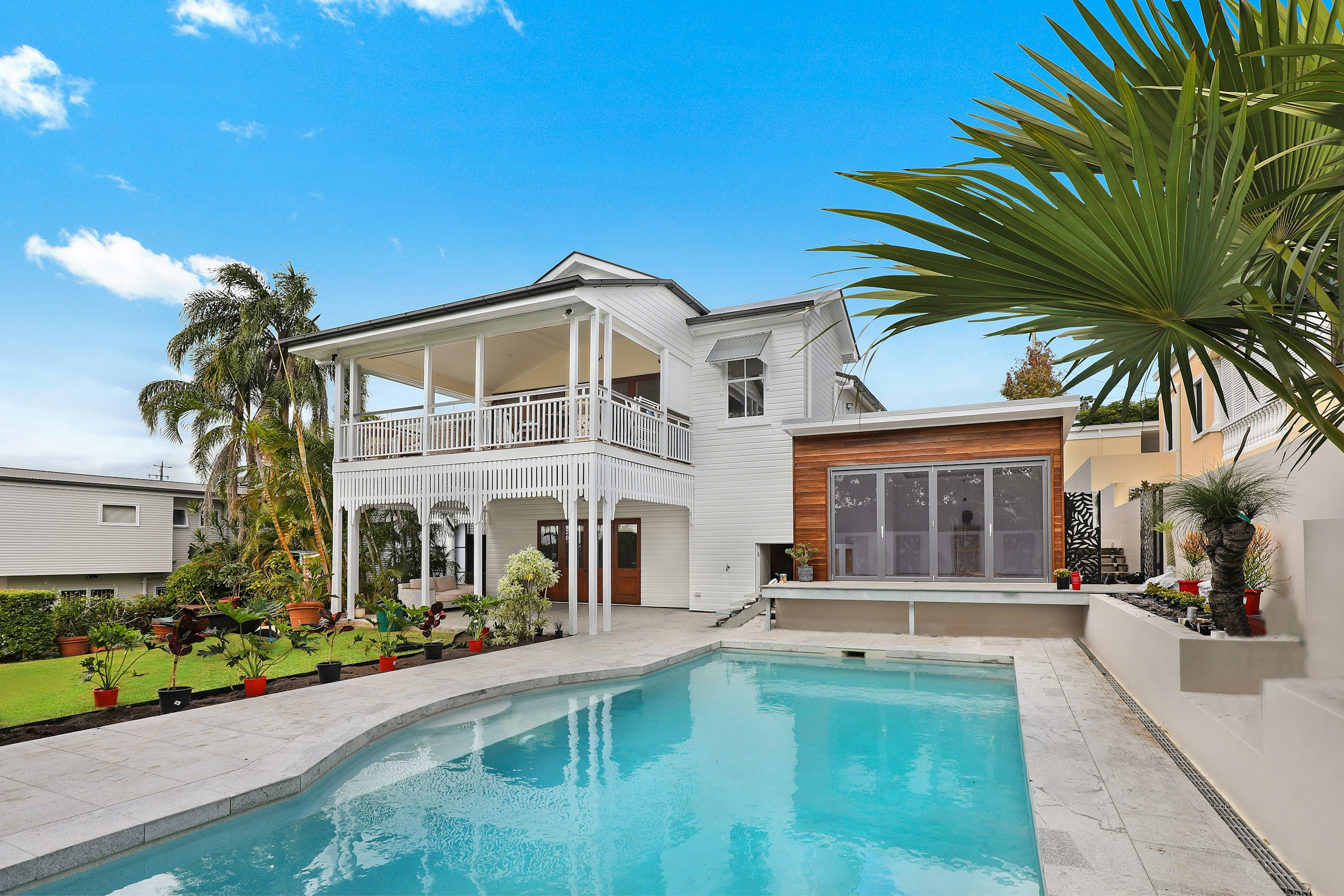
Drive east of downtown Panama City along the Corredor Sur and the change in built environment is unusually abrupt. Past the airport-bound interchange, the irregular blocks of San Francisco give way to wide avenues, manicured berms and a grid of slate-coloured residential towers that all share the same setback. Costa del Este does not look like the rest of the metropolitan area. That is by design.
The thesis, unveiled in 1995
The masterplan was first presented publicly thirty-one years ago. According to its public record, the project covered 310 hectares of reclaimed land east of the airport-bound highway, partitioned into eleven distinct zones — high- and low-density residential, a financial centre, an office park, a commercial park, mixed-use, public services, an industrial park and a central plaza. Underground cabling, gated subdivisions, and a unified street grid distinguished it from anything else being built in the metropolitan area at the time.
The bet was simple. Panama City would keep growing east, and a single developer holding the masterplan rights could deliver something the patchwork pattern of older neighborhoods could not: coherent infrastructure, predictable buildout, and a buyer experience close to North American suburban norms.
What got built
Three decades on, the buildout is largely complete and visible from the highway. Single-family homes occupy the interior subdivisions; high-rise residential towers cluster along the perimeter. A town centre with a mall and a hospital anchors the commercial core. The financial centre attracted regional headquarters — among them Copa Airlines, which moved its main offices into the Business Park, alongside operations centres for several international banks and an insurer's regional office. Two private international schools and a hospital cluster fill out the institutional layer.
It is the only large-scale planned community of its kind inside the metropolitan area. Casco Antiguo is a UNESCO restoration zone; Punta Pacífica is a reclaimed-land tower district without a master developer; Costa del Este sits between them in scale and ambition, and is unique in its top-down execution.
How it reshaped the eastern axis
Costa del Este is impossible to separate from the highway that feeds it. The Corredor Sur, completed alongside the early phases of the masterplan, runs along the waterfront and connects directly to the original financial district at one end and Tocumen International Airport at the other. The roughly two-kilometre marine viaduct over the bay made Costa del Este the closest residential cluster to the airport that also offers a sub-fifteen-minute drive to downtown when traffic cooperates.
That geography pulled the city's centre of gravity east. Corporate tenants that might once have stayed in the original financial district — the cluster around Calle 50, Marbella and Obarrio — increasingly preferred Costa del Este's purpose-built office parks. The shift was gradual but compounding: as more international firms anchored east, the residential market followed.
What the data lets us say, and what it doesn't
Local market commentary tends to treat Costa del Este as the metropolitan area's premium suburb. Pricing differences with adjacent neighborhoods are real but not uniform: a high-floor unit in a perimeter tower trades closer to Punta Pacífica equivalents than to interior San Francisco, while a single-family home in one of the gated interior subdivisions has no real comparable elsewhere in the city. The category-by-category spread is wider than headline averages suggest, and any single price-per-square-metre figure conceals more than it reveals.
Vacancy behaves the same way. The tower-heavy perimeter cycles inventory faster — corporate transfers, expat rotations, dollar-denominated rents — while the interior subdivisions are predominantly owner-occupied and rarely turn over. Anyone reading a Costa del Este market report should ask which slice of the inventory the number describes before extrapolating.
A single price-per-square-metre figure for Costa del Este conceals more than it reveals. The perimeter towers and the interior subdivisions are effectively two different markets stitched into the same name.
Who actually buys here
Two profiles dominate. The first is the upper-middle Panamanian family priced into single-family living and willing to commute the Corredor Sur for it; the second is the international corporate transferee whose employer is anchored in the financial centre and who wants short commutes, walk-to-school logistics, and the kind of curated public realm that is easy to compare with home. Foreign retirees, who tend to gravitate to Casco Antiguo or to coastal towns outside the metropolitan area, are not the dominant buyer here. Pure capital investors are less common than they are in Punta Pacífica, where the rental-yield math is cleaner because the inventory is more uniformly tower stock.
The trade-offs the original brochure did not mention
The deliberate planning produced predictable outcomes — and some equally predictable costs.
- It is overwhelmingly autocentric. The interior subdivisions are walkable inside their gates and not outside them; crossing between zones generally means driving.
- Architectural variety is narrow. Most perimeter towers share a similar massing, glazing and finish vocabulary, which makes the skyline coherent but the visual experience repetitive.
- The single-developer history means common-area governance is unusually consolidated. That helps maintenance standards but narrows resident discretion over public-space decisions.
- The eastern location is closer to the airport but farther from Casco Antiguo's restaurants and from the older social fabric of San Francisco and Bella Vista. Weekend life in Costa del Este often involves leaving Costa del Este.
None of these are deal-breakers, and a masterplan defender would correctly note that every comparable neighborhood in metropolitan Panama City has trade-offs of its own. They are simply the conditions a buyer should walk in understanding.
The honest read, thirty years on
Costa del Este delivered most of what its 1995 promoters claimed it would: coherent infrastructure, a working financial-centre cluster, schools and a hospital, a stable upper-middle residential market. It did not deliver — and was never going to deliver — the kind of street-level urbanism that a foreign buyer who fell in love with Casco Antiguo is looking for. The two neighborhoods solve different problems for different households, and both can be the right answer.
The interesting question for the next decade is whether the masterplan's coherence holds as the city's eastern expansion continues past it. The Costa del Este perimeter is now effectively built out; growth pressure is moving further east, into less planned terrain. Whether the masterplan's standards travel with that expansion, or stop at its boundary, will say a great deal about what Panama City has actually learned from the experiment.